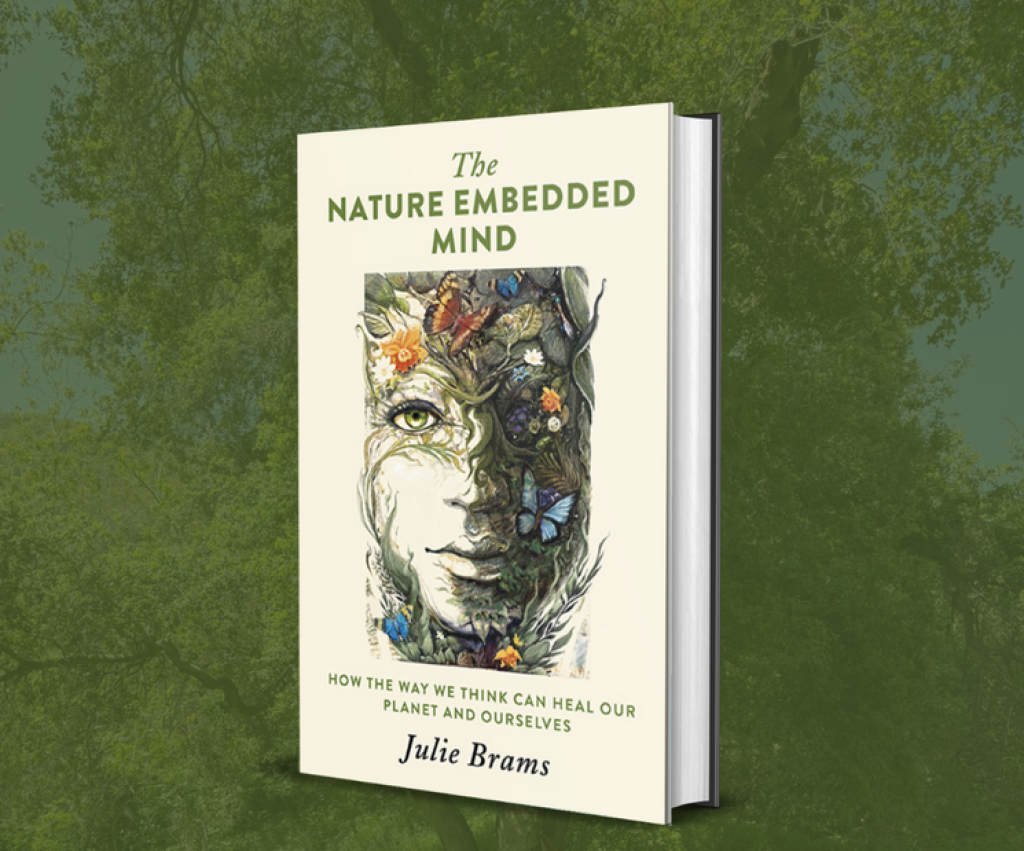
 There’s a moment early in this book where something quietly but fundamentally shifts.
It’s not dramatic. It’s not argumentative. It’s more like a recognition—something you already knew, but had been trained not to see.
Julie Brams is making a simple claim: we are not separate from nature—we are part of it.
And while that idea sounds almost cliché at first, the longer you sit with it, the more you realize how deeply we’ve built our lives around the opposite assumption.
That’s where this book does its best work.
What This Book Actually Does
This isn’t a book about going outside more.
It’s a book about changing the way you think about yourself entirely.
Brams calls this shift “reEarthing”—a reframing of identity in which you stop seeing yourself as a human navigating an environment and start recognizing yourself as one expression of a larger living system.
At first, I found myself resisting that language a bit. It felt semantic. But as the book progressed, it became clear that the language is the point. The way we speak reflects the way we think—and the way we think determines how we behave.
And according to Brams, that behavior—rooted in separation—is what’s driving both:
- our mental health struggles
- and our ecological problems
That’s a bold claim, but she presents it in a way that feels more invitational than forceful.
Where It Lands (and Where It Doesn’t)
What stood out most is that this isn’t just philosophical—it’s experiential.
Brams repeatedly emphasizes that you cannot think your way into this shift. You have to experience it:
- sitting outside without a goal
- paying attention without labeling
- allowing nature to “respond,” rather than just observing it
That’s where the book moves from interesting to useful.
At the same time, this is not a tightly argued, evidence-heavy book in the traditional sense. If you’re looking for rigorous scientific debate or competing viewpoints, you won’t find much of that here. The perspective is clear, consistent, and largely unquestioned.
Also, the core idea is repeated often. For some readers, that will feel redundant. For others, it will feel necessary—because the book is trying to undo a lifetime of conditioning, not just deliver a new concept.
Who This Book Is Really For
If you approach this book purely intellectually, you’ll probably walk away thinking:
“Yes, that makes sense.”
But if you actually engage with it the way the author intends—taking ideas outside, reflecting, experimenting—you may find yourself thinking:
“I’ve been seeing this wrong the whole time.”
This is especially relevant if you:
- work with people (therapy, coaching, leadership)
- are interested in mental health beyond symptom management
- feel some level of disconnection, anxiety, or subtle dissatisfaction
- suspect that “modern life” might be missing something fundamental
My Take
This book doesn’t overwhelm you with complexity. It does something harder: It challenges a hidden assumption that most people never question.
And once you see that assumption—that you are separate from the rest of life—it becomes difficult to unsee how much of modern thinking is built on it.
I wouldn’t call this a perfect book. It leans more toward conviction than debate and could have benefited from greater engagement with opposing views.
But that’s also part of its strength. It’s clear. It’s focused. And it asks you to try something, not just agree with something.
Recommendation
Read it if you’re willing to test its premise, not just evaluate it.
Take one idea—something simple like sitting outside with no agenda—and actually do it the way she suggests.
That’s where the book stops being a perspective and starts becoming an experience.
Bottom Line (In Plain Terms)
Most books give you new information.
This one asks you to change the lens through which you experience reality.
If you’re open to that—even slightly—it’s worth your time.
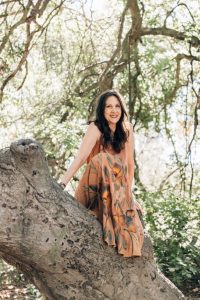
Julieann Brams, MA, LMFT, is an Earth-centered psychotherapist, certified Forest Therapy guide, meditation practitioner/teacher, and writer in Los Angeles for 30 years. Her psychotherapy practice integrates traditional therapy, ecopsychology practices, meditation, and the latest advances in the field of neuropsychology.
Certified by the Association of Nature and Forest Therapy, she leads nature immersion experiences and workshops, taking people into the woods to help them heal themselves and the rest of nature.
She has presented on the topic of ecopsychology and the neuroscience of nature for the treatment of anxiety, depression, and optimal mind-body health at California State University, Northridge, The American Public Health Association, The Institute of Noetic Sciences, as well as many churches and synagogues.
She is dedicated to social change and environmental sustainability through re-establishing our intimate connectedness with the rest of nature.
Leave a Reply